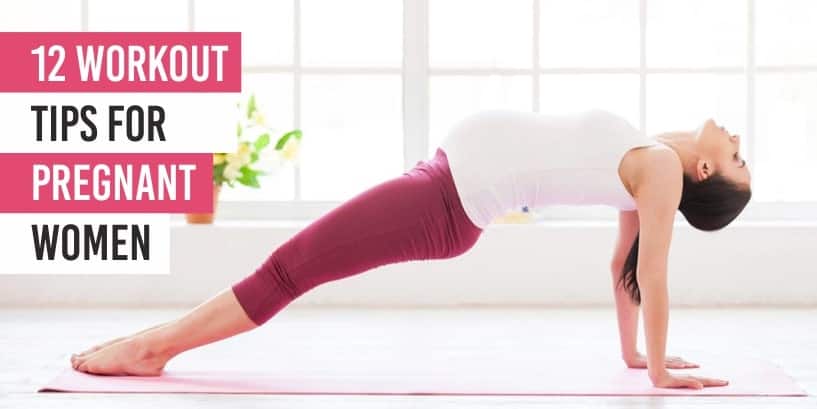
12 workout tips for pregnant women

‘Pregnant women workouts’ undoubtedly makes it to one of the top search history slots for most moms-to-be. Exercising during pregnancy can be immensely helpful. It has been proven to yield incredible results for both the physical as well as mental wellbeing of pregnant women. Yet, only about 40% of pregnant women indulge in it.

Your workouts don’t have to be long and stressful. 150 minutes of moderate physical aerobic activity/week during and after pregnancy will serve the purpose well. You can choose to exercise five times a week for thirty minutes or ten times a week for fifteen minutes. If you are already accustomed to heavy physical activity like running before pregnancy, continue the same.

Here are twelve tips to guide you on your way to fitness, however, we recommend that you consult your doctor first before adopting the below –

1. Take a quick stroll if you’re not used to regular workouts.

A quick stroll around the neighbourhood will offer adequate cardiovascular activity without stressing your knees and ankles. You can also walk on your terrace or verandah. It is completely your choice, and you can walk anywhere you want to at a time that suits you best. Ask your close friends and family for company so that it becomes something you look forward to every day. Fresh air will make you healthier from inside out by brightening up your mood and keeping your immune system in check at the same time. Fresh air can do wonders for both the body and mind.

Steer away from obstacles like rocks and potholes, wear supportive footwear and walk on smooth surfaces. You are good to go!

2. Buoyancy can offer relief.

As pregnancy progresses, your increasing body weight may cause discomfort. Swimming, walking in water and aqua aerobics are some fun activities that enable motion without putting too much pressure on the joints.

Breaststroke is a great choice as it is comfortable and does not strain the neck, shoulder or back muscles. If you want to strengthen your leg and buttock muscles, you can use a kickboard.

Here are some safety tips that you must keep in mind while swimming –

  • Use the railing while ascending and descending to avoid slipping and hurting yourself.
  • Do not dive or jump into the water as it can impact the abdomen.
  • Avoid visiting warm pools, steam rooms and hot tubs as overheating can be dangerous.

3. Squatting can help during labour.

Squatting will help you in opening up your pelvis during labour. Here’s how you can do it –

  • Step 1:

    Keep your back straight and stand with your feet shoulder-width apart.

  • Step 2:

    Slowly, lower your buttocks while keeping your feet flat. Your knees should be no further apart than your feet.

  • Step 3:

    Reach the lowest point possible and hold for 10-20 seconds. Push yourself up and repeat.

4. Practice pelvic tilts to reduce back pain.

Pelvic tilts strengthen the abdominal muscles and thus aid in reducing back pain. Here is a step-by-step guide for the same –

  • Step 1:

    Get down on your hands and knees. Pull your abdomen in and tilt your hips forward while rounding the back.

  • Step 2:

    Hold for a few seconds and release. Let your back drop. Repeat this over ten times.

5. Kegel exercises can reduce the risk of urine leakage.

Kegel exercises are simple and can tone the muscles on the pelvic floor. Strong pelvic muscles will make it easier for you to push during delivery. Further, it will also prevent incontinence afterwards.

6. Opt for spinning if you are a first-time exerciser

Spinning is nothing but cycling on a stationary bike. It will raise your heart rate without pressuring your joints and pelvis. As the bike is stationary, it will support your body weight, and the risk of falling is minimal. In later stages of pregnancy, a higher handlebar will feel more comfortable.

7. Socialize in low impact aerobics classes.

Low impact aerobics imply that at least one foot stays on the ground at all times. It strengthens the heart and lungs while limiting the stress on the joints. It can also help you tone your muscles and improve balance.

You can opt for classes designed specifically for pregnant women. These classes will have the advantage of a trainer who is well-qualified to deal with your situation. If you are already into aerobics, ensure that you let your instructor know that you are pregnant so that suitable modifications can be made to the exercise regimen.

8. Maintain flexibility with yoga.

Yoga helps in pain and stress management and keeps the joints limber. It strengthens the muscles and boosts flexibility. It also stimulates blood circulation, and practising it regularly will result in healthy blood pressure. Finally, Yoga is a fantastic way to relax. You will even get to learn techniques to stay calm during labour in pregnant women yoga classes.

However, keep these points in mind as the pregnancy progresses –

  • Avoid poses that may involve overbalancing or lying on the abdomen.
  • Spend more time doing exercises that involve lying on the back.
  • Avoid overstretching as it can lead to injury.

9. Choose the right attire.

Dress up in loose-fitting and comfortable clothes and invest in a sturdy support bra. To further prevent injury, choose specific shoes for the exercise you have decided to practice. If you are experiencing swelling in your legs, you can wear compression stockings.

10. Avoid overheating like the plague.

Drink plenty of water before, during and after the exercise to keep yourself hydrated. Don’t exert yourself too much and always avoid overheating. Finally, get up slowly and gradually to prevent dizziness.

11. Take appropriate measures to avoid losing balance.

Always exercise on a flat surface to avoid losing balance and hurting yourself. Weight fluctuations during pregnancy change the centre of gravity of the body, which puts extra strain on the joints and muscles in the lower back. Negligence can lead to severe consequences.

12. Track your exercise schedule.

As pregnancy progresses, there will be several changes in your body. It is important to monitor the effect of each activity and maintain flexibility in your regimen whenever required.

The bottom line

Though exercise has myriad benefits, you should consult your doctor if you are suffering from asthma, heart disease, hypertension, diabetes or any other pregnancy-related condition. You can then arrive at a program to match your unique needs.

Happy Working Out, Ladies!

10 Decisions Women Must Take Once They’re Pregnant

Pregnancy is a special phase in a woman’s life. Along with happiness and excitement, a slew of decisions faces every pregnant woman. The difference between relaxed motherhood and an anxious one is your preparedness before childbirth. Moreover, making significant decisions during pregnancy will give you enough time to consider every option carefully, thus letting you choose the best for yourself and your little one. So pull out a chair, take a sip of your favorite beverage, and read on to know the top 10 decisions you must take when you’re expecting.

  1. Who should be my gynecologist?

This is one of the undeniably important decisions you must take during the early months of pregnancy. Not every woman would ponder over this question for years in advance, so it’s helpful to take recommendations from your friends and family. Prepare a list and shortlist a few based on their reputation and the location they’re based at so you can pay a visit anytime you need. Book an appointment with the gynecologists you have shortlisted and question them exhaustively to find the one you wholeheartedly trust.   

  1. When should I take maternity leave?

This is an important decision facing working moms-to-be. Many organizations in India offer compensated maternity leaves. Talk to HR to understand the policies completely and decide when you will avail the maternity leave. Plan your tasks and don’t hesitate to ask for help, because the last thing you need is work tension nagging you when trying your best to cater to your child.

  1. What should my daily diet plan look like?

The food you eat is the main source of nourishment for the fetus. Having a proper pregnancy diet plan will ensure a consistent intake of necessary nutrients. Pregnant women need more Calcium, Folic acid, Iron and Protein than women who are not pregnant and here’s why

  • Calcium – Helps in the growth of bones and teeth in the baby.

Foods rich in Calcium – Milk, yogurt, cheese, salmons, and leafy greens.

  • Folic acid – Prevents birth defects in the baby’s brain and spinal cord.

Foods rich in Folic acid – Cereals, beans, and citrus fruits.

  • Iron – Regulates the supply of oxygen in the blood.

Foods rich in Iron – Beans, peas, poultry, and meat.

  • Protein – Helps build important organs in the baby’s body such as brain and heart.

Foods rich in Protein – Eggs, nuts, tofu, and fish.

  1. What kind of clothes should I wear?

It is the second trimester when you will find that most of your clothes won’t fit you anymore and wish you shopped earlier. Pregnancy shopping is both exciting and tiring. It’s is common for many women to feel uncomfortable about how they look, but luckily a variety of maternity clothing choices are available today that are comfortable and stylish. Here are a few things to keep in mind while shopping for maternity clothes:

  • Opt for soft and breathable fabrics. Your clothes must absorb sweat and avoid skin rashes.
  • Ensure that your clothes are easily washable which will come in handy once morning sickness sets in.
  • Consider buying pregnancy panties that give support to your bump.
  • When buying bottoms with elastic, make sure they are soft on your skin and not too tight.
  • Go for clothes that can accommodate your growing belly.
  1. Which baby brands should I buy from?

We hear you! This may not seem like an important decision to make when you’re pregnant. Visit any retail baby shop or e-commerce store and you will thank us for adding this to the list. From pacifiers to diapers, there are countless options to choose from. It is not uncommon for moms-to-be to stock up on baby essentials. Shortlisting a few baby brands you can buy from will let you make informed buying decisions later. There are several things to consider when shopping for your baby and Quality tops that list.

Be it bottles, teats, or finger brushes, it is important to ensure they are made of non-toxic materials. Opt for products that are both 100% EA and BPA free. Today, BPA-free is not enough. BPA is just 1 of 564 backlisted EA (Estrogen Activity) chemicals. Plastics containing EA chemicals can leach into food when heated or used for a long time. EA chemicals lead to hormone-related illnesses and growth and development issues. As moms, you have to make sure you give the safest products to your child.

  1. Should I sign up for prenatal counseling? 

Prenatal counseling can help you navigate through the many tough decisions that pregnancy throws at you. Talking about your insecurities to a prenatal counselor can go a long way in making informed decisions later. With prenatal counselors increasing in India lately, finding an experienced counselor in your locality could be just a Google search away. Keep in mind to attend the free demo sessions the center might offer before signing up.

  1. What changes should I make in my home?

Prepping your home before the arrival of your little one can give time for you and the people in your home to get used to the changes. Moreover, it’s easy to get your house in order than when you’re sleep deprived later.

  1. Who will be my child’s pediatrician?

When it comes to choosing the best pediatrician for your child, try to eliminate the trial and error method. Just like you will choose a gynecologist, ask for recommendations from your friends and family. Make sure the practitioner has updated knowledge on child upbringing methods. Don’t forget to take the location of the clinic or hospital into consideration as you may need to visit more often during the first few months of your little one.

  1. Should I bank my baby’s umbilical cord blood?

Umbilical cord blood is rich in stem cells that could be later used to treat leukemia and a range of metabolic disorders. On the contrary to what some parents may think, collecting cord blood doesn’t cause pain. If you decide to store your baby’s umbilical cord blood, find a blood bank that can do it for as long as you want and within your budget.

  1. What should I name my baby?

Choosing a name for your baby is a monumental decision. Some parents-to-be may even find this extremely confounding. It is always good to have a shortlist of three baby names per sex to make this whole task exciting rather than overwhelming.